
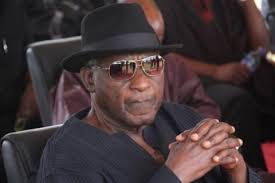
Volgens AFP is die bekende Ghanese digter en diplomaat, Kofi Awonoor (foto), een van die mense wat verlede week omgekom het tydens die tereuraanslag deur Islamitiese militantes op ‘n winkelsentrum in Nairobi, Kenia. Awonoor (78) se seun is ook tydens dié aanval gedood. Awonoor was in Nairobi om aan die Storymoja Hay Literary Festival deel te neem.
Kwame Dawes, neef van Awonoor en eweneens ‘n gerekende digter, het volgens AFP die volgende te sê gehad: “I think the son went to pick up something at the mall. Professor Awoonor was in the parking garage waiting for him. The son was shot while he was inside the mall. We don’t know at what point the professor was shot.”
“He straddled many, many, many worlds,” het Esi Sutherland-Addy, ‘n hoogleraar verbonde aan die Universiteit van Ghana in reaksie op die nuus gesê. “He’s an elderly gentleman. You would have thought that such a person would pass away peacefully. That’s what you wish for. This is just absolutely the last thing that one would have thought.”
Awonoor was die Ghanese verteenwoordiger by die VN gedurende Jerry Rawlings se presidentskap (1990 tot 1994). Meer onlangs was hy voorsitter van die Ghanese presidentsraad, maar dit is uiteraard vir sy digkuns wat hy vereer en onthou sal word: “He was most noted for his poetry inspired by the oral tradition of the Ewe people, to which he belonged. Much of his best work was published in Ghana’s immediate post-independence period, part of which he spent in exile after the first president and post-colonial icon Kwame Nkrumah, to whom Awoonor was close, was overthrown in a coup.” Aldus AFP se beriggewer.
By wyse van huldeblyk volg een van die digter se meer bekende gedigte hieronder.
*
Song of Sorrow
Dzogbese Lisa has treated me thus
It has led me among the sharps of the forest
Returning is not possible
And going forward is a great difficulty
The affairs of this world are like the chameleon faeces
Into which I have stepped
When I clean it cannot go.
I am on the world’s extreme corner,
I am not sitting in the row with the eminent
But those who are lucky
Sit in the middle and forget
I am on the world’s extreme corner
I can only go beyond and forget.
My people, I have been somewhere
If I turn here, the rain beats me
If I turn there the sun burns me
The firewood of this world
Is for only those who can take heart
That is why not all can gather it.
The world is not good for anybody
But you are so happy with your fate;
Alas! the travelers are back
All covered with debt.
Something has happened to me
The things so great that I cannot weep;
I have no sons to fire the gun when I die
And no daughter to wail when I close my mouth
I have wandered on the wilderness
The great wilderness men call life
The rain has beaten me,
And the sharp stumps cut as keen as knives
I shall go beyond and rest.
I have no kin and no brother,
Death has made war upon our house;
And Kpeti’s great household is no more,
Only the broken fence stands;
And those who dared not look in his face
Have come out as men.
How well their pride is with them.
Let those gone before take note
They have treated their offspring badly.
What is the wailing for?
Somebody is dead. Agosu himself
Alas! a snake has bitten me
My right arm is broken,
And the tree on which I lean is fallen.
Agosi if you go tell them,
Tell Nyidevu, Kpeti, and Kove
That they have done us evil;
Tell them their house is falling
And the trees in the fence
Have been eaten by termites;
That the martels curse them.
Ask them why they idle there
While we suffer, and eat sand.
And the crow and the vulture
Hover always above our broken fences
And strangers walk over our portion.
© Kofi Awonoor (1935 – 2013)
Johann, ek weet – en ek het aangeneem ons deel die siening. Ek stry nie met jou nie. Het jou maar net ‘n bietjie probeer terg oor die gebruik van “stry” in hierdie konteks. Ek sou sê Awoonor het in daardie jare die stryd teen Apartheid in die VN gelei as ambassadeur van Ghana.
Breyten, ek het eintlik probeer verwys na Kofi Awoonor se betrokkenheid by die VN se Spesiale Komitee teen Apartheid, waarvan hy aan die begin van die 1990’s die voorsitter was. Ek gaan uiteraard akkoord met jou ontleding.
Allerverskrikliks, maar so aangrypend.
Kofi Awonoor (1935 – 2013): Long live.
‘simbool’! My spellchecker vra nie eens my opinie voor hy my koloniseer nie. Hy erken nie Afferkaans nie – wat nog te sê van Kaaps!
Seker darem nie “gestry” het nie, Johann… Apartheid het nooit ‘n argument gehad waarteen mens jou sou verwerdig om te stry nie. Dat Kofi Awoonor daardie droglering die stryd aangesê het is ‘n feit. Ons vergeet deesdae dat opeenvolgende generasies van Afrika se intellektuele en denkers en kunstenaars gelouter is in die stryd teen die onmenslike en mensonterende ideologie wat, so is daar gevoel, alle Afrikane verneder het. En nou is daar ‘n nuwe onmenslikheid. Dis ‘n wrang simboll dat een van Wes-Afrika se grootste en mees deurwinterde stryders juis in ‘n verbruikerspaleis vir rykes in Oos-Afrika moes omkom, waarskynlik afgemaai deur jong Afrika fanatici wat glo hulle veg teen mensontering.
Awoonor se werk was/is in wese ‘n groot antikolonialistiese projek. Hy het ook in onder meer die VN teen apartheid gestry.
Hier is die middelste gedeelte van Awonoor se gedig “Across a New Dawn” – ek voel net dit moet aangehaal word – dit is pragtig, vol hoop ten spyte van alles wat gebeur het. Soos Derrida dit weereens duidelik maak in een van sy laat werke A Taste for the Secret (Derrida en Ferraris 2001), geweld is onvermybaar (ons moet goed eet (bien manger, Derrida 1992:282)), maar daar is geweld en geweld, en hy verkies om die een soort brutaliteit te noem, want “not only [is it] an unrefined violence, it is a bad violence, impoverishing, repetitive, mechanical”, dit is ‘n geweld “that does not open the future, does not leave room for the other”. Hier is die gedeelte uit Kofi Awonoor se gedig wat op bien manger eindig:
(…)
On the seaside, the ruins recent
from the latest storms
remind of ancestral wealth
pillaged purloined pawned
by an unthinking grandfather
who lived the life of a lord
and drove coming generations to
despair and ruin
*
But who says our time is up
that the box maker and the digger
are in conference
or that the preachers have aired their robes
and the choir and the drummers
are in rehearsal?
No; where the worm eats
a grain grows.
the consultant deities
have measured the time
with long winded
arguments of eternity
And death, when he comes
to the door with his own
inimitable calling card
shall find a homestead
resurrected with laughter and dance
and the festival of the meat
of the young lamb and the red porridge
of the new corn
(…)
Prof. Kofi Awonoor was ‘n kremetartboom in die landskap van Afrika se poësie. Ek haal graag my hoed af wanneer ek by ‘n groot boom kom.
Dankie, Louis. Hier is ook een van Awonoor se laaste gedigte, met inligting oor ‘n bundel wat binnekort verskyn.
http://blogs.wsj.com/speakeasy/2013/09/22/read-one-of-kofi-awoonors-final-poems/